MR. MINER'S PHISH THOUGHTS

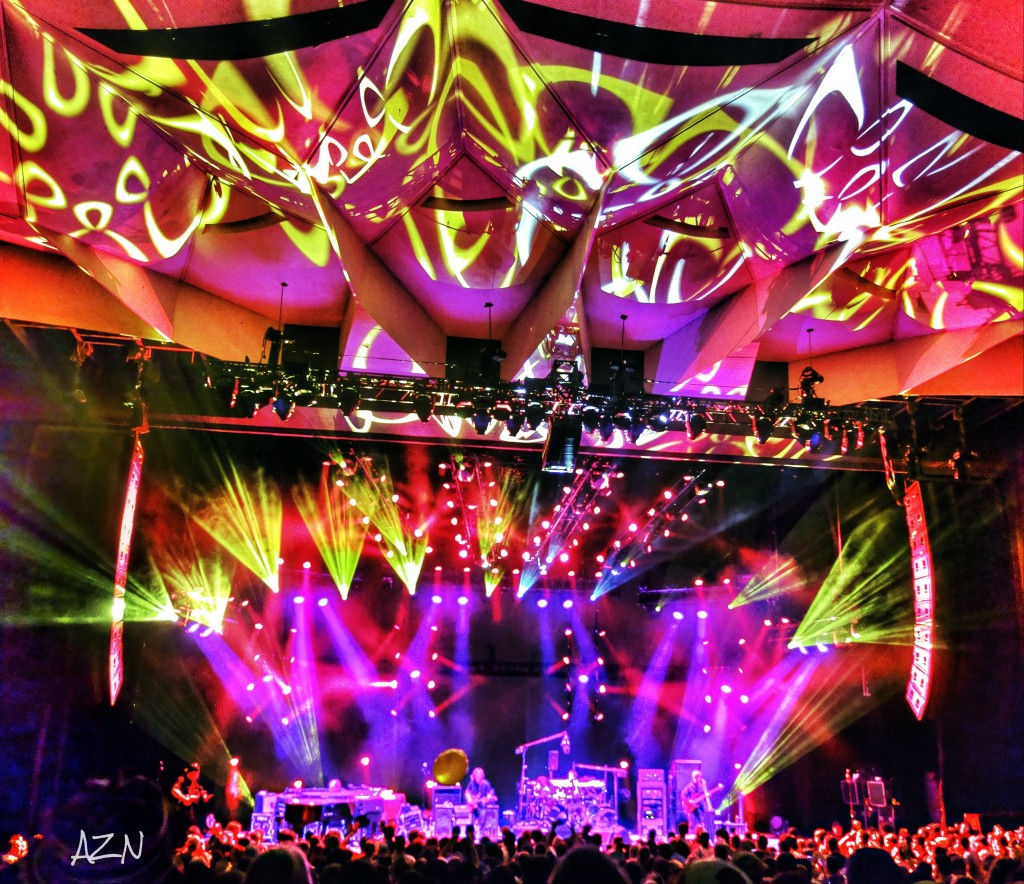
SPAC 14 (Andrea Nusinov)

Showcasing new songs, original jams and a clear exuberance to be onstage again, Phish kicked off Summer Tour 2014 in style with four shows last week. Polished, practiced and ready to roll, the guys hit the ground running, requiring exactly zero time to warm up and dropping timeless jams from night one. Armed with a new material and playing with unbridled creativity and confidence, Phish seems poised to play a tour for the record books.

Following a sharp show in Mansfield that heated up in its final sequence of “Ghost” -> “Weekapaug, “Harry Hood,” the band unleashed three flowing second sets in Saratoga Springs that illustrate their continued re-commitment to show craftsmanship that we saw blossom last fall. Frustrating trends that have plagued the modern era—aborted jams, random song calls and fizzling second sets—have all but vanished, and the artistic Phish of old has re-emerged. Crafting contoured frames of music, the band has brought narrative arcs back to their second sets—the journey of a Phish show has fully returned. Wide open jams, smooth transitions, and shrewd song placement colored all three of SPAC’s main events. Highlight segments that illustrated these themes include “Bathtub Gin > Limb by Limb > Winterqueen,” “Fuego > Disease > Twist > Light” and “Carini > Waves > Wingsuit > Piper.” Each second set adopted a unique vibe—7/3 was explosive and energetic, 7/4 took on a far more cerebral feel, and 7/5 possessed lighter, dreamy strand throughout. When three consecutive shows provide three unique and completely different musical experiences, it is a surefire sign that Phish is in a very special place.
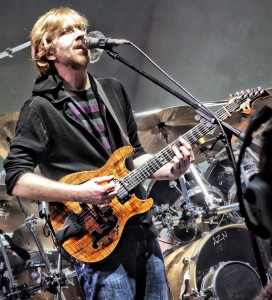
10.29.13 (A.Nusinov)

The band flipped an improvisational switch during Mansfield’s “Ghost” and has not looked back. Offering totally fresh takes on their jams nightly, Phish seems to be consciously improvising in new and different directions. Examples of this include the masterful and unforced exploration of “Harry Hood in Mansfield, the spacious dance grooves of “Bathtub Gin, the swinging rhythmic filth of “Limb By Limb,” an intricate, deconstructivist “Disease” jam, the meditative jazz fusion of “Twist > Light,” an ethereal “Carini,” “You Enjoy Myself” featuring a Mike and Trey prompted funk jam, and of course the first free-form “Fuego.” (Though “Piper” had a stellar Trey peak, I can’t say that it was a totally original rendition.) Throughout all of their jams of week one, however, Phish’s communication has been notably tight and responsive, having seemingly reached mid-tour form rather quickly this go round. And there are eighteen shows to go.

Setlists have seen an expected infiltration of Fuego material, and most often with positive results. First and foremost, “Fuego” has ascended to the center of the Phish universe with the monumental debut of its jam. There’s nothing quite like it when Phish premieres a brand new jam, and “Fuego’s” introduction was as grand an entry as any ever. A dramatic, 20-minute trek that peaked into the heavens with a stunning crescendo sent a clear message to their fan base of Phish’s intent with their new title track—”Set the controls for the heart of the sun.” This is clearly the new school jump off. Aside from “Fuego,” however, the only other new song that seamlessly wove itself way into the live show was “Winterqueen.” Employed as a landing pad for the other-worldly sequence of “Bathtub Gin > Limb by Limb,” “Winterqueen” sounded like Phish had been playing it for years. The unexpected twist was the opening of its final solo, a hint of what could possibly come from the song. All other Fuego tunes, though sounding quite good in the live setting, are still searching for their comfortable place in the setlist.
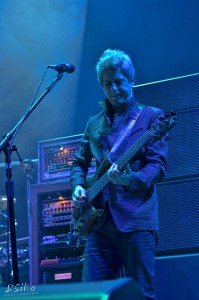
10.31.13 (J.Silco)

From a macro perspective, the band sounds incredibly comfortable on stage together. Their improv has been characterized by a looseness that allows for all sorts of exploration, but, at the same time, a tightness of purpose that allows the band to explode into jams and reach experimental planes without several minutes of meandering. The way they are stringing together these jams and crafting larger segments of music, and ultimately sets and shows, however, is what is setting the band apart from their recent former selves. This comfort level will only increase as the tour moves on, and one should expect to see more well-crafted sets as we look towards Philadelphia.

And from a more micro perspective, how about that July 4th show? Hot damn! Talk about a fresh sounding set of music in which the faucet was turned on for the duration! As majestic as “Fuego” was, the most complex music of the night was yet to come in the next three selections of “Disease,” “Twist,” and “Light.” All in all, this four-song sequence totaled 55 minutes of creative, top-shelf interplay that left just about every jaw on the ground. Each jam was unconventional and each jam was unique. This was the type of innovative set of which we dream, and had the band finished strong with a significant closer instead of moving into “Theme,” “Number Line” and “First Tube,” we’d be looking at a legitimate all-time set of Phish. Even so, 7/4 was a signature performance that deserves recognition among the band’s best in years. And 7/3 wasn’t far behind, containing the most accomplished sequence of the weekend in “Bathtub Gin > Limb By Limb > Winterqueen,” and a thick, groovy “Tweezer.”

And this is only the tip of the iceberg. If this is what Phish had to offer in their first week of Summer shows, one can only imagine what is to come over the next three. Inspired, loaded with new material and dropping awe-inspiring jams left and right, Phish has their fan base on the edge of their seats once again, salivating to live the next chapter of the band’s storied history.

Week One Picks:

Best Show: 7/4

Best Set: 7/4 II

Best Jams: Mansfield “Harry Hood” and SPAC “Limb by Limb”

Best Moment: “Fuego” peak
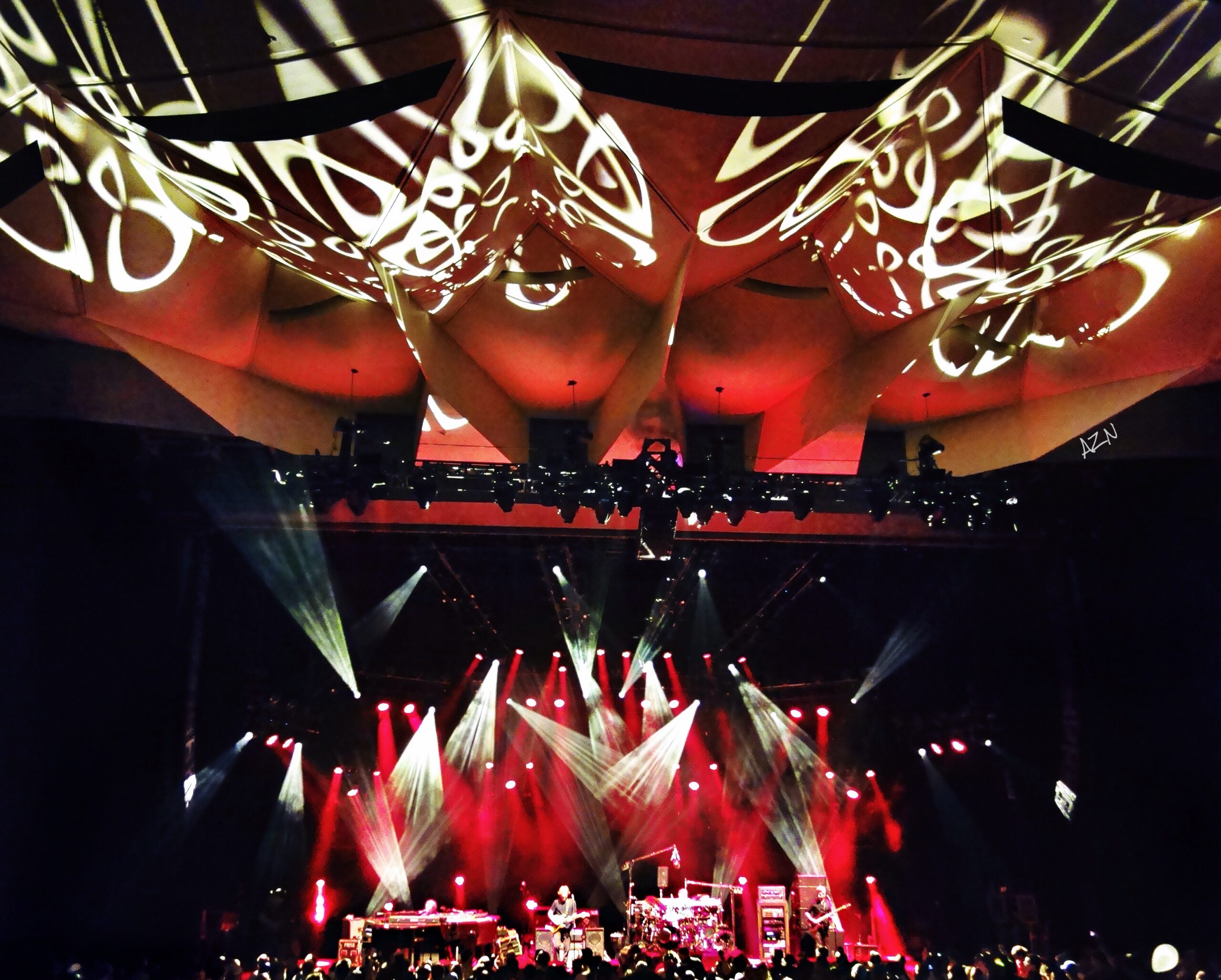
SPAC ’14 (Andrea Nusinov)

Showcasing new songs, original jams and a clear exuberance to be onstage again, Phish kicked off Summer Tour 2014 in style with four shows last week. Polished, practiced and ready to roll, the guys hit the ground running, requiring exactly zero time to warm up and dropping timeless jams from night one. Armed with a …

A Quick Start to Summer Read More »

As Phish started leaking their album track by track on the Internet, I heard a lot of production. In fact, when I listened to those “Waiting All Night” and “The Line” from NPR, the production was just about all I heard. My thoughts totally transformed today, however, when I spun Fuego on vinyl for the first time on my home system. The music completely opened up, gaining a richness and depth that NPR’s mp3s could never translate. And above all else, I could hear and appreciate Bob Ezrin’s production as it was meant to be heard. As opposed to adding a glossy layer to the music that dilutes the band’s interactions, Ezrin’s work enhances the playing of Phish, adding dreamy layers that provide just enough aural cushion to support the music and make it pop. But the core of the Fuego’s sound is live Phish. In choosing to record live takes with all band members in the same room playing together, Ezrin retained thePhish’s sound capturing a vivid canvas with which to work. He then stepped to the plate as the temporary fifth member of the band, whose influence is felt on Fuego as much as the other fours’.

Ezrin’s greatest success on Fuego is taking a stylistically diverse set of songs and making them into a cohesive whole. The album possesses a flow from beginning to end, and more particularly, retains a sound throughout that is anchored in its retro, psych-pop production. Musically, Fuego contains a certain dreaminess that comes through in waves on tracks like “Halfway to the Moon,” “Winterqueen,” “Waiting All Night,” “Wingsuit” and the title track, itself. This musical thread provides a cerebral narrative to the album, one that touches on themes of loss, hope and, ultimately, redemption.

Though Fuego’s story is told in chapters via one well-executed track after another, its two gems are undoubtedly its bookends, “Fuego” and “Wingsuit.” In fact, these two tracks may just be the pinnacle of Phish’s studio repertoire. Both contain unparalleled work from Ezrin, leaving “Fuego” sounding like a medieval adventure, and “Wingsuit” like a lucid dream. Each possess a strong emotional quality that will undoubtedly translate to the live stage. Though Phish has recorded plenty of great songs over the course of their career, “Fuego” and “Wingsuit” represent legitimate studio tracks that can stand up against the work of other great artists.

Interspersed in the album’s surreal narrative are the upbeat selections “The Line,” “Devotion to a Dream” and “Sing Monica.” “The Line” provides an excellent sonic juxtaposition to “Fuego,” and flows impeccably from the title track. “Devotion to a Dream,” sounds quite good on the album and fits in with the album’s thematic narrative congruently. The overlapping chorus of this one really shines with the Ezrin’s assistance, though “Devotion’s” bluesy, Allmans-esque  palette is one of Fuego’s furthest stylistic stretches. “Monica” is another, and this one barely rounds into place. Its brevity, however, makes it only a speed bump and not a true obstacle to flow. Rounding out Fuego are “555” and “Wombat.” Gordon’s writing contribution to the album, “555” came out as one of its highlights, as the horns and backing singers further the bluesy grit of the song. Upon listening to the album as a whole, “Wombat” didn’t strike me as so out of place. Silly? Sure. With its placement between “Waiting All Night” and “Wingsuit,” it likens one of those tripped out dream interludes make any sense in the morning. But the inclusion of “Wombat” and “Monica” suggest the only place where Phish might have dropped the ball on this album—leaving off “Steam.” Not only is it a more-than-worthy track that could supplant both shorter ones, it absolutely fits the fantasy-like theme of Fuego. But who am I to blow against the wind.

Fuego succeeds where so many Phish albums fall have fallen short, its whole amounts to more than the sum of its parts. Though it is not a perfect record, its sonic cohesion and thematic narrative and outstanding production bump it right up to the top shelf of Phish’s twelve. I am not here to argue that it is their best record, for that is purely subjective, however I will nominate it as their best produced effort, and one that deserves recognition among the band’s strongest recordings. It’s been a while since Phish emerged from the studio with an album that they could hold up not only to their fan base, but to the industry at large and garner acclaim. Fuego is such a record, and the band should be proud.

As Phish started leaking their album track by track on the Internet, I heard a lot of production. In fact, when I listened to those “Waiting All Night” and “The Line” from NPR, the production was just about all I heard. My thoughts totally transformed today, however, when I spun Fuego on vinyl for the …

On Fuego Read More »

With all the excitement in the land of Phish these days—Fuego, Letterman, Live Bait X and an upcoming tour, one might forget that Phish left us with some pretty great shows at MSG last December. Coming off a Fall Tour that seems to have has gained a consensus in the community as the best of the era, the band delivered three out of four standout performances to end the year. Now, on the brink of Summer Tour 2014, Phish looks to continue the upward arc of their Golden Age as they step into the Fuego era.

Fuego Live

The most integral aspect of successful shows—from a fan’s perspective—is the band’s excitement, engagement and energy. Based on what we’ve been hearing through media outlets, the guys are excited as ever with their new album and are eager to work the material into their live shows. Trey even went as far as to say that Phish would play less covers this summer, as they want to focus on their originals. As covers usually comprise a significant percentage of open jam platforms, one would conclude that some new ones will take their place. But out of Fuego’s songs, which ones will they be?

I believe that “Fuego” will be one of the bands central jam vehicles this summer. I see it opening—and/or being centered in the wheelhouse of—second sets throughout tour, and extending into diverse improvisations. I foresee the jam coming out of the end of the song—as previewed on New Year’s Eve—and I predict that it will be a completely open-ended affair (much like “Light” has been for the past five years). They changed the title of the album and put the title track first for a reason—“Fuego” is the new school Phish scene and will expand as soon as it is played.

12.28.13 (J.Silco)

Additionally, I see “Wingsuit” becoming a significant piece in the band’s live repertoire. Whether the jam opens up at first or debuts as a guitar-solo based piece is the biggest question in my mind right now. Regardless of how it starts out, I bet we see the jam open up a couple times before tour’s end. Though “Wombat” is the clear stylistic outlier on an otherwise cohesive album, I foresee it’s funk jam growing legs this summer. The song has the feel of a first-setter, possibly replacing “Moma Dance” with something a more open-ended. But if ever they decide to place “Wombat” in the second set, the band could take the silly piece for a ride.

The other track that has a possibility of developing a jam is Mike’s “555.” But every time I say that I balk, because when is the last time a contribution from Gordon has blown up. Keep thinking…”Simple” perhaps? It’s been a while. Just saying, I’d give “555” about a less than 50% chance eclipsing guitar solo status. But I’m pulling for more out of this song, because its dark and funky feel give it all sorts of potential. Perhaps this is the one! On a similar note, will Trey finally release lift the shackles from “Halfway to the Moon” from its status as first set filler? Talk about potential! Ever since its debut at SPAC 2010 I have wished it open up, but its inclusion on an album won’t likely change it’s live placement.

The other tracks from Fuego won’t likely be more than solid first-set songs or late-second-set ballads. Maybe, just maybe, Phish will play a one-off jam out of “The Line” or “Waiting All Night,” but seeing as they rarely play one-off jams out of anything these days, this seems a tad unlikely. Jams aside, however, expect a serious influx of fresh music into the rotation, as Phish has never been shy to push their new material!

Trey and the Echoplex

The Echoplex

For the last four shows of the year, Trey brought an Echoplex on stage with him, and used it extensively in jams throughout the Holiday Run. The Echoplex is an analog tape delay unit created in 1959, that creates many of the effects that Trey’s pedals have digitally mimicked over the years. Remember the final stage of the Carini jam on 12/29, the one where Trey was rocking the Garden and improvising off his own licks with massively dissonant delay? That was the Echoplex. My sincere wish is that Trey brings this unit with him on tour this summer. It brought tremendous nuance and creativity to several jams over the holidays, and with a month on the road, I can see Trey getting even more controlled and inventive with the unit.

Two Sets

Everyone’s eternal hope is that Phish brings more to the table in first sets than a series of singles. Even “Stashes” “Gins” and “Antelopes” have been far to innocuous to truly add any spice to opening frames when they do appear, so in what lies the answer? I am not sure. But as everyone knows, when the band truly delivers two sets of smoking music—think 11/1/13 Atlantic City or 8/31/12 Denver—shows become far more elevated affairs. I guess it boils down to predictability. If the patterns of first sets become utterly formulaic, how does the band want the fan to approach them? The new material should help, but some good ol’ creative jamming—whether of the type-I or type-II variety—would do a whole lot more.

Sail On, Sail On

MSG 2013 (A.Nusinov)

Phish has hit a legitimate stride over the past two years. 2012 and 2013 provided the payoff for the three rebuilding years that preceded them, years that have plentiful highlights in their own right. Summer 2013 brought a flood of creativity from the band, as they approached some old jams differently, and generally infused fresh sounds and directions into their open jamming without relying on many conventions of old. It truly felt that every show brought “new” music to our ears, in a way that even 2012 did not. This trend continued over Fall Tour, when virtually every second contained a cohesive narrative, something that had been still missing from several summer shows. Phish’s set-craftsmanship came to a modern peak over Fall ’13, featuring such flowing second frames as 10/20 Hampton, 10/26 Worcester, 10/27 Hartford, and 10/29 Reading. This trend continued over the Holiday Run, as all second (and third) sets flowed well after the night one’s choppy affair.

My overarching point here is that Phish need not tweak to much in their live show. They are doing just fine. If their continuous evolution of 3.0 continues, we are looking at what should be one of the band’s best tours of the modern era. And there is no reason that anything should slow them down.

With all the excitement in the land of Phish these days—Fuego, Letterman, Live Bait X and an upcoming tour, one might forget that Phish left us with some pretty great shows at MSG last December. Coming off a Fall Tour that seems to have has gained a consensus in the community as the best of …

Looking Towards Summer Tour Read More »

Phish 1994 (Unknown)

In their heyday, Phish advanced their style of play on a tour-by-tour basis, constantly refining their past while adding facets to their game. Their progression through the groove paradigm of the late-‘90s has been well documented on this site, but the first peak of the band—the years between 1993 and 1995—followed an evolutionary path as well. New Years Eve ’93 in Worcester was the culmination of Phish’ early years. Demolishing The Centrum with arguably the most impressive performance of their career to that point, Phish had peaked out their musical style. 12/31/93 represented the apex of the band’s tight and frenetic “speed jazz” approach to jamming. Most often within song-structure and communicating far more like jazz musicians than the psychedelic rock colossus of later years, the band had honed this style from their earliest days, and it came to a notable head during 1993’s Summer Tour, specifically in the month of August. But after the year came to a close in Worcester, Phish had to find a new path. In a very similar dynamic to their year-end show at Madison Square Garden only two years later, the walls of their musical style could be pushed no further, and the band needed a new focus. The answer to this year-end dilemma of ’93, interestingly enough, would put Phish on a road directly to December 31, 1995.

Phish 1994 (Unknown)

As the band stepped into the touring year of 1994, in was inhuman to think they could jam any tighter or faster than they had in ’93, so it was time to loosen up. Just a bit at first—and then a whole lot more. Phish’s “speed jazz” jamming of ’93 could be generally described as pushing a musical structure as far as it could possibly go within it’s boundaries. In 1994, the band traveled an outward path, loosening up first over Spring, more over Summer, to Fall where all structure would be obliterated. Along this path towards abstraction, Spring ’94 represented the beginning of the “contortion of structure” phase that intensify throughout the Summer. During Spring tour the band was just starting to bend structures, while their playing was still clearly rooted in the jazzier approach of their previous years. As they took their first steps towards musical deconstruction, Instead of “speed jazz,” Phish began to play “psych jazz.”

With this shift, the band became more adventurous. They were more likely to fully leave a set course of a jam to pursue a sonic tangent. Jams often carried abrupt, stop-start cadences, and carried angular feels. These were the days of centering “Antelope” and “David Bowie” in the wheelhouse of the second set, jams that spurned intricate, conversations with band members playing closely off each others phrases, either repeating or responding to each other in the jazz tradition. There were no effects, no soundcsapes, just straight playing.

11/94 (J. Commentucci)

While pointing towards the open-jamming that would infiltrate the band’s live shows in the Fall of the same year, the playing of Spring ’94 was still only months removed from the band’s year-end shows of ’93, and things don’t change in an instant. And therein lies the beauty of this tour. It sounds like balls-out, classic Phish, but with a dash of exploration sprinkled throughout.

Come November Phish would be undertaking, long-form jams such as the Bangor “Tweezer,” Bozeman “Tweezer,” Minneapolis “Bowie,” Providence “Bowie” and many more iconic explorations. One can clearly trace this outward progression from the beginning of Spring ’94, through Summer and Fall, all the way to Summer  ’95—Phish’s most abstract tour. This Spring, they were just scratching the surface of this direction, and for this reason I can see why this tour holds a special place for purists. And the tapes don’t lie.

Today I have put together a Spring ’94 “psych jazz” playlist. (I will do another for Summer.) These jams illustrate the first step away from structure in Phish’s movement towards becoming the most proficient, whole-band improvisers of all time.

David Bowie” 4.13.94 II, New York, NY

A late-second set “Bowie” from the first of three nights at the Beacon Theatre.

***

Run Like an Antelope” 4.14.94 II, New York, NY

A ferocious, centerpiece “Antelope” that set the tone for the many versions to follow on Spring tour.

***

David Bowie” 4.17.94 II, Fairfax, VA

“Bowie” jams have started to expand already, as the band many versions early on in tour.

***

Bathtub Gin” 4.18.94 II, Newark, DE

A short, but sweet “Bathtub Gin” that jumps out of theme.

***

David Bowie” 4.24.94 II, Charlotte, NC

And this “Bowie,” from the Grady Cole Center, was the version to which all the others were pointing.

***

Tweezer” 5.7.94 II, Dallas, TX

The Bomb Factory “Tweezer” represented a big turning point in the band’s willingness to let things move far outside the box.

***

Run Like an Antelope” 5.8.94 II, Bee Cave, TX

Phish’s mojo was still working the night after the Bomb Factory, as evidenced by this centerpiece “Antelope.”

***

Split Open and Melt” 5.13.94 II, Tempe, AZ

A “Melt” from the desert

***

Run Like an Antelope > BBFCFM > Antelope” 5.16.94 II, LA, CA

The now-legendary “Big Black Furry Antelope” from LA’s WIltern Theatre.

***

Tweezer” 5.28.94 II, Monterey, CA

Spring ’94 ended at Laguna Seca Daze festival along the central California coast. Phish played two-setters each night. This was the “Tweezer” from the first night.

***

Split Open and Melt” 5.29.94 II, Monterey, CA

And the “Split” from the tour-closer.

In their heyday, Phish advanced their style of play on a tour-by-tour basis, constantly refining their past while adding facets to their game. Their progression through the groove paradigm of the late-‘90s has been well documented on this site, but the first peak of the band—the years between 1993 and 1995—followed an evolutionary path as …

Spring ’94: The Birth of “Psych Jazz” Read More »

“David Bowie” 11.19.96 (Unknown)

Though Phish picked up a new direction on Halloween ’96, they did not just up and drop their old style. Just as many jams became forward-looking pieces that hinted at the groove of ’97, many standout excursions still elevated via Trey’s lead guitar. And the sonic juxtaposition between the two styles was significant. The jams that foreshadowed the funk were informed by the Talking Heads ethos of collaboration on a single groove—each person contributed a part of one, overall musical structure. The other sort of post-Halloween highlight of Fall ’96 nodded to the breakneck, psych rock patterns that fueled their ’94 and ‘95 ascent. But most of all, these jams were anchored by Trey’s marksman-like lead playing. Remaining out front for almost the entirety of these retro-looking jams, Trey stepped back only to play his mini drum kit, another sound that tied these improvisations to the past rather than the future. But with their newfound inspiration from their holiday cover set, this retro style of jamming received a necessary jolt as well. The beautiful thing, however, about this juncture in Phish’s career, was their past was glorious and their future was brighter than they could possibly imagine.

For the five weeks of Fall ’96 that followed Halloween, these 95/96 hybrid jams were just as common, if not more so, than the 96/97-style excursions. Additionally, as evidenced by 11.6’s “Mike’s Song” from Knoxville and 11.13’s “Suzy Greenberg” from Minneapolis, Phish often mashed these two styles together in long-form jams that moved between improvisational approaches within single, era-morphing pieces. Whereas groove jams were a pushing of their own musical envelope at this time, these psych rock pieces with Trey at the helm represented Phish’s safe space on which they could comfortably rely.

Promo poster 11.22.96

One can hear a totally different dynamic within these 95/96 hybrids as compared to their 96/97 counterparts. There was far more urgency behind these pieces, and the band communicated in a  totally different manner. During mid-90s arrival, Trey’s lead guitar was like a compass, always guiding the band in the right direction, and it was this time-tested formula that guided these jams. When jams opened up, most often, the rest of the band would fall back into support positions for their six-stringed assassin. One can hear Page and Mike play “behind” Trey, almost like jazz players comping a soloist. But Leo and Cactus often “comped” with whole melodic phrases of their own, a technique that formed a notably dense musical palette. Page stuck mostly to piano and organ during these pieces, using the 96/97 jams to incorporate his crunchier clavinet and electro sounds that would come into full bloom during the following years. Page and Mike often stepped to the forefront when Trey hopped on his kit, a common pattern in many extended Fall ’96 jams, but when he was done playing rhythms and picked up his axe, this dynamic returned quickly.

Fall of ’96 was a fascinating time in the Phish world. What began as a listless tour down the East Coast was totally transformed and invigorated by Halloween, took on a revitalized sense of adventure in the weeks thereafter. The band’s renewed inspiration shone through in their many groove-laced jams that dotted their westward road, but it also came through loud and clear in the final stretch of old-school, psych rock jams of their career. Though their Phish’s music would assume several stylistic shifts over the rest of their career, never again would we hear the improvisational remnants of their iconic peak of 1993-1995. Their sound changed forever.

Today, I present to you a playlist that illustrates this then-dying breed of old-school, psych rock jams as seen through the lens of late-Fall ’96.

Bathtub Gin” 11.7.96 II, Lexington, KY

A historic piece that is a perfect example of the style of jamming to which I am referring. If Trey is holding his guitar, he is leading the way brilliantly. And in this jam he does so in more ways than one.

***

Simple” 11.8.96 II, Champaign, IL

After a stint on the kit, Trey picks up his guitar and annihilates the rest of this hard-edged jam.

***

Split Open and Melt” 11.15.96 II, St.Louis, MO

Phish’s old-school style of improvisation truly catered to “Split,” as evidenced by this balls-to-the-wall version from St. Louis’s “M” set.

***

Mike’s Song” 11.15.96 II, St.Louis, MO

This take-no-prisoners “Mike’s” jam leans strongly towards ’95 in pace and texture. And it is amazing.

***

Simple” 11.18.96 II, Memphis, TN

In this well-known “Simple,” following his turn on the mini-kit, Trey takes the helm with a heart-wrenching solo and never lets go. Page offers gorgeous comps of piano and organ, but there is no question who is center stage in this one.

***

David Bowie” 11.19.96 II, Nashville, TN

This extended, set-opening “David Bowie” illustrates the guitar-centric style of the 95/96 hybrids. Page provides some co-leads on piano in spots throughout the journey.

***

Weekapaug Groove” 11.23.96 II,  Vancouver, BC

When Trey played like this, “Weekapug” really packed a wallop!

***

Simple” 12.6.96 II, Las Vegas, NV

“Simple” was the most prolific jam of Fall ’96, and this final version from Vegas provides a third, very different take on Gordon’s anthemic piece.

***

Mike’s Song” 12.28.96 II, Philadelphia, PA

This Mikes” moves into a blissier territory than most from the year on the heels of gorgeous lead playing by Trey and some equally beautiful piano co-leads by Page. (And it gave me a tenth track to round out the playlist.)

***

Tweezer” 12.30.96 II, Boston, MA

Phish’s year end “Tweezer” was one of the last versions in which Trey would assume such a lead role and maintain it throughout.

Though Phish picked up a new direction on Halloween ’96, they did not just up and drop their old style. Just as many jams became forward-looking pieces that hinted at the groove of ’97, many standout excursions still elevated via Trey’s lead guitar. And the sonic juxtaposition between the two styles was significant. The jams …

A Dying Breed Read More »

Get the Book!

Island Run Pins

Recent Posts

Links

Phish News

Miner's Picks

Contact

All Right Reserved |

- 2023